Before the next storm
Dead & Hazard Tree Removal in Corpus Christi, TX
Trees that are dead, decaying or leaning toward something that matters, removed on a calm day instead of in a gale.
- Free on-site estimates across Corpus Christi and the Coastal Bend
- A clear written price, no lump-sum guessing
- Yard left raked and cleared as agreed
Spotting a Tree That Is Likely to Fail
Dead and hazard tree removal is the planned version of storm cleanup. A hazard tree is one with a defect serious enough that part or all of it is likely to fail, standing where it could hit a house, a car, a fence or a person. In Corpus Christi, long dry spells, salty wind, shallow soil over caliche and past hurricanes leave a lot of trees in that condition, and it is far easier and cheaper to remove them on a quiet morning than with a crew working around a broken roof.
Signs we look for
Some signs are obvious: a tree with no leaves in midsummer, bark falling off in sheets, mushrooms or soft wood at the base. Others take a closer look. Cracks running down a trunk, a fork where two stems meet in a tight V with bark pinched between them, a lean that has gotten worse, soil heaving on one side of the base, cavities, and large dead limbs high in the crown all raise the odds of failure. On palms, a rotted crown or a trunk that has narrowed sharply can mean the head is going to drop.
Why dead wood gets more dangerous
A freshly dead tree is still fairly strong. As months pass, the wood dries, checks and decays, and it becomes brittle and unpredictable to climb or cut. Angi lists diseased trees with soft or brittle wood at $400 to $900, and HomeGuide notes that dead trees often cost more than expected because of the added risk. Waiting rarely makes the job easier, and a tree that is standing dead going into hurricane season is a real risk to the house.
When a tree does not need to come out
Not every defect means removal. A live oak with one broken limb or some dead branches in the crown can often be pruned and kept. Live oaks are among the most wind-resistant trees on the Gulf Coast. We will tell you when removing a dead limb, reducing a heavy one or simply watching the tree is the better choice.
Typical Jobs
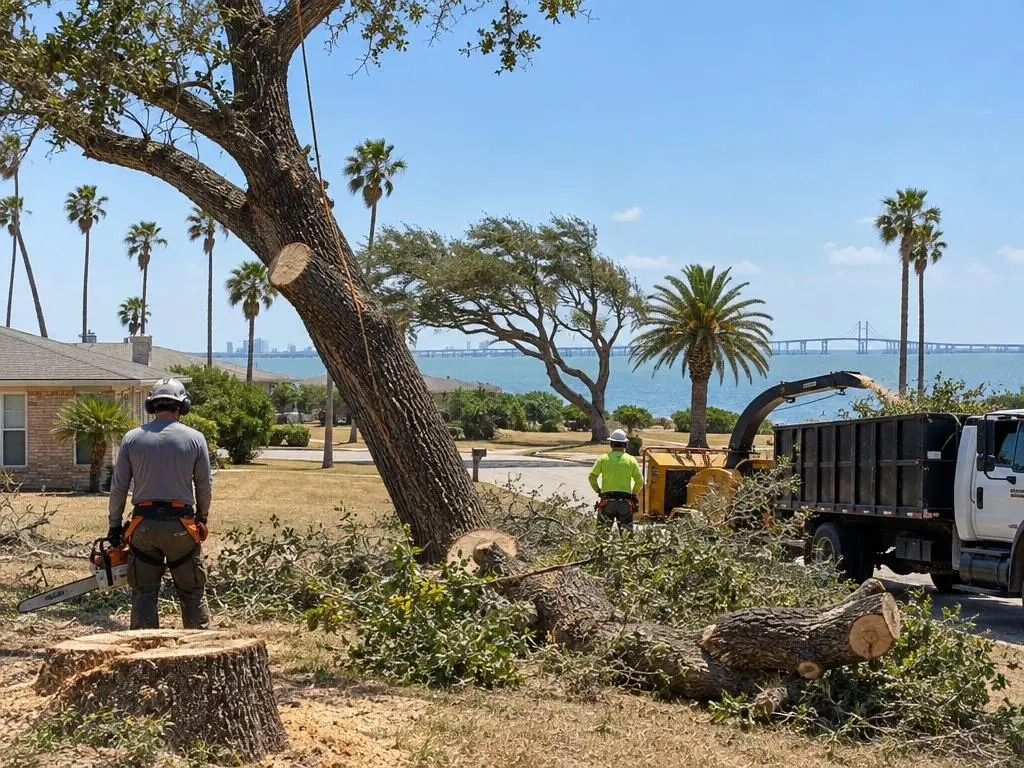
Hazard removal includes the assessment and the safest way to take the tree down.
Drought-killed trees
Trees that died during dry years, removed before the wood turns brittle.
Leaning trees
Trees with a new or worsening lean, especially toward a house, driveway or street.
Decay and cavities
Trees with rot at the base, hollow trunks or fungus, assessed and removed if the remaining wood is too thin.
Split and included-bark forks
Trees with a cracked fork or a V-shaped union that is starting to separate.
Dead limb removal
Large dead limbs over roofs or patios taken off when the rest of the tree is worth keeping.
Dead and Hazard Tree Removal Costs at a Glance
| Job | Published range |
|---|---|
| Tree removal, Corpus Christi typical (This Old House) | $279 to $1,226 |
| Diseased tree with soft or brittle wood (Angi, national) | $400 to $900 |
| Tree up to 30 ft (Angi, national) | $150 to $450 |
| Tree 30 to 60 ft (Angi, national) | $450 to $1,200 |
| Hard-to-reach or unsafe location (Angi) | add 25% to 50% |
| Oak removal (HomeGuide, national) | $300 to $2,500 |
Figures from This Old House's Corpus Christi page, Angi (2026) and HomeGuide (2026). Dead wood, structures underneath and tight backyards raise the price. Your written estimate is the price.
What to Expect
1. Look at the tree and its target
We check the defect and what the tree would hit if it failed.
2. Recommend remove, prune or monitor
You hear plainly whether the tree needs to come out or can be made safer.
3. Quote in writing
The method, the cleanup, the stump and the price, in writing.
4. Controlled removal
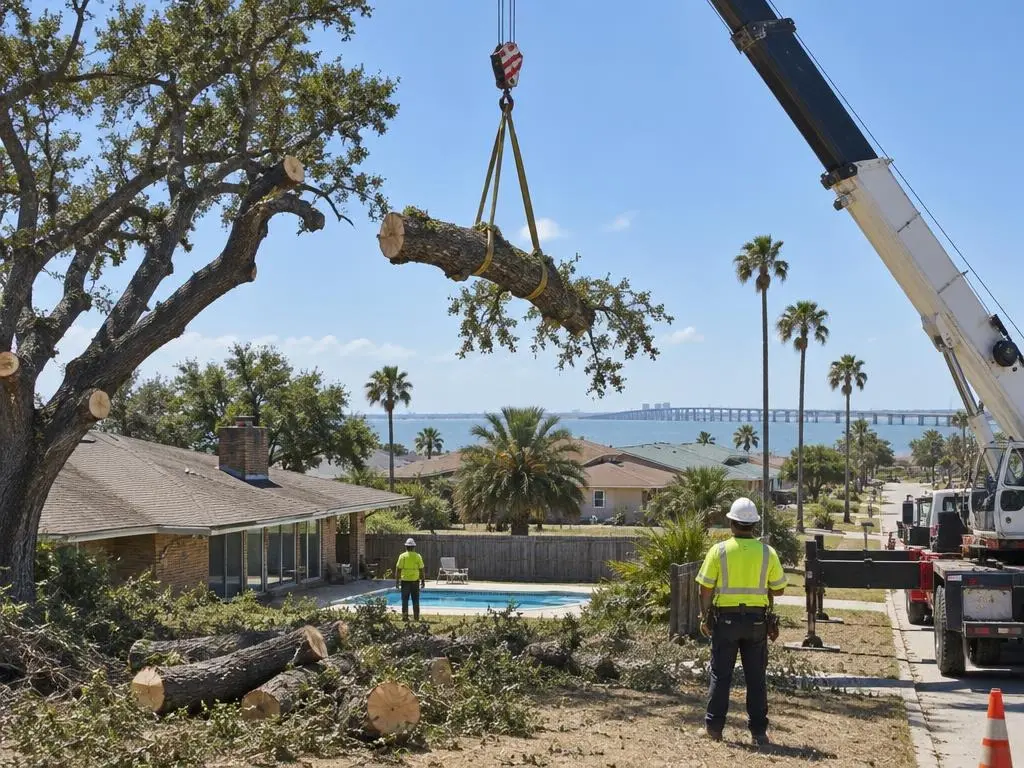
Brittle trees are often taken down in smaller pieces, and climbing is limited when the wood is unsound.
5. Site cleanup
Wood and brush hauled or left as agreed, and the yard cleared.
Why Choose Us for Dead & Hazard Tree Removal
Straight answers
If a tree only needs one limb off, that is what we quote.
Careful with brittle wood
Dead trees are planned around weak wood, not climbed like healthy ones.
Timed before storms
Spring and early summer visits let you deal with hazards before peak hurricane months.
Dead & Hazard Tree Removal Questions
How can I tell if a tree is dead or just dormant?
Scratch a small twig with a fingernail. Green, moist tissue underneath means that part is alive; brown and dry means it is dead. If most twigs are dry and no new leaves appear in the growing season, the tree is likely dead.
Is a leaning tree always dangerous?
No. Many trees grow with a lean, especially on the windy coast. A lean that is new, that has changed after a storm, or that comes with cracked or lifted soil on the opposite side is the warning sign.
My neighbor's dead tree could fall on my house. What can I do?
Tell the neighbor in writing and keep a copy. In Texas you can trim branches that cross onto your property up to the line, but removing the tree is the owner's call. A written notice can matter if the tree later falls and causes damage.
Can a dead tree be left for wildlife?
Sometimes, if it stands well away from anything it could hit. A dead tree near a house, fence or play area should come down. Part of the trunk can be left as a short snag in a back corner if you like.
Dead & Hazard Tree Removal Service Areas
- Tree Removal in Corpus Christi, TX
- Tree Removal in Flour Bluff, TX
- Tree Removal in Calallen, TX
- Tree Removal in North Padre Island, TX
- Tree Removal in Portland, TX
- Tree Removal in Gregory, TX
- Tree Removal in Ingleside, TX
- Tree Removal in Aransas Pass, TX
- Tree Removal in Port Aransas, TX
- Tree Removal in Rockport, TX
- Tree Removal in Fulton, TX
- Tree Removal in Taft, TX
- Tree Removal in Sinton, TX
- Tree Removal in Odem, TX
- Tree Removal in Robstown, TX
- Tree Removal in Banquete, TX
- Tree Removal in Agua Dulce, TX
- Tree Removal in Driscoll, TX
- Tree Removal in Bishop, TX
- Tree Removal in Kingsville, TX
Get a Dead & Hazard Tree Removal Estimate
Free estimates for dead and hazard tree removal.